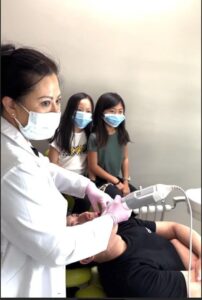
At Titan Dental, Dr. Thuy B. Le, a Blue Diamond Invisalign Provider, is committed to delivering exceptional dental care with a focus on personalized, compassionate treatment. She strives to create a comfortable, welcoming environment for every patient, ensuring each visit is tailored to individual needs and promotes optimal oral health. Dr. Le’s dedication to using the latest dental technologies and adhering to the highest standards of safety and hygiene reflects her unwavering commitment to her patients’ well-being and satisfaction. Trust Dr. Le and the Titan Dental team to help you achieve and maintain a beautiful, healthy smile.
A child’s smile changes in small ways before parents even realize something important is happening. One month, a tiny front tooth feels loose. A few weeks later, an adult tooth appears at an angle. Then suddenly, the bite looks different, the jaw seems crowded, or your child starts chewing on one side more than the other. These little signs are often the smile’s way of asking for attention. That is where a Phase 1 consultation at Titan Dental becomes valuable. This visit is not about rushing your child into treatment. It is about understanding how the teeth, jaw, bite, and facial growth are developing while there is still time to guide them gently. With Dr. Thuy B. Le, parents receive a clear, thoughtful look at their child’s growing smile. The appointment is calm, friendly, and focused on answers. You will learn whether your child’s dental development is on track, whether early support may be helpful, or whether simple monitoring is the best next step.
The Smile Map Begins With a Conversation
Every child’s smile has its own story. Before looking at teeth, Dr. Le begins by listening. Parents may be asked what they have noticed at home. Does your child breathe through the mouth? Do they snore? Are adult teeth coming in behind baby teeth? Is there crowding, spacing, thumb-sucking, or difficulty biting into food? These small details help guide the visit. The pediatric orthodontic consultation process is not only about checking the mouth. It is also about understanding habits, family dental history, growth patterns, and daily challenges that may affect the way a child’s smile develops. Children are also gently included in the conversation. Dr. Le may ask simple questions about brushing, chewing, or whether anything feels uncomfortable. This helps children feel involved instead of nervous.
A Close Look at the Growing Smile
After the conversation, Dr. Le performs a careful visual exam. This is where Dr. Thuy B. Le’s children’s smile assessment becomes the heart of the visit. She looks at how the baby teeth and adult teeth are working together, whether there is enough room for new teeth, and how the upper and lower teeth meet. This step may reveal early signs of crowding, crossbite, underbite, deep bite, open bite, narrow arches, or delayed tooth eruption. Sometimes, what looks like a small concern on the surface may point to a larger growth pattern beneath the surface. Other times, something that worries a parent may be completely normal for the child’s age. The goal is not to make assumptions. The goal is to understand the smile from every angle.
Checking the Jaw Before It Finishes Growing
One of the most important parts of this visit is the early jaw and tooth development check. Children’s jaws are still changing, which means this stage can offer a helpful window for guidance. Dr. Le checks whether the jaw is growing evenly, whether the bite shifts to one side, and whether there is enough space for permanent teeth to come in properly. She may also look at how the lips, tongue, and cheeks influence the bite.
This is the foundation of growth-focused orthodontic care for children. Instead of waiting until every adult tooth has erupted, Phase 1 care focuses on development while growth is still active. In some cases, early guidance can help create space, improve bite balance, and support a healthier path for future teeth. That does not mean every child needs treatment. Many children only need observation. A consultation simply helps parents know the difference between “let’s watch it” and “let’s guide it now.”
Photos, Scans, and X-Rays Tell the Hidden Story
A child’s mouth can only show part of the picture during a visual exam. To see what is happening below the surface, Titan Dental may use photos, digital scans, or X-rays when needed. Photos help track the smile over time. Digital scans create a detailed view of the teeth without messy impressions. X-rays may show adult teeth still waiting beneath the gums, missing teeth, extra teeth, impacted teeth, root positions, and spacing concerns. These tools help Dr. Le explain findings clearly. Instead of hearing a complicated explanation, parents can see what is happening. This makes the visit easier to understand and helps families feel more confident about the next step.
When Early Guidance May Be Helpful
Some children benefit from early care before the teen years. This is often called interceptive orthodontic treatment for kids. It means stepping in during the growth stage to help guide the smile before certain problems become harder to manage. Early treatment may be discussed if a child has severe crowding, a narrow jaw, crossbite, a tendency toward underbite, harmful oral habits, blocked adult teeth, early loss of baby teeth, or a bite that may affect jaw growth. The purpose of Phase 1 care is not to create a final adult smile right away. It is to build a healthier foundation. Think of it like helping a young tree grow straighter while the branches are still flexible. The earlier guidance may make the next stage smoother, simpler, or more predictable.
Where Invisalign Phase 1 May Fit In
For some children, clear aligner care may be part of the discussion. Invisalign Phase 1 treatment planning allows Dr. Le to review whether aligners can help guide early tooth movement, spacing, or arch development. If this option is suitable, Dr. Le will explain how the aligners work and what daily habits are needed for success. Children should wear aligners all the time, except for oral hygiene. Consistent wear helps the planned movement stay on track and gives the treatment the best chance to work as intended. Parents also learn how to help their child keep aligners clean, remember daily routines, and attend progress visits. Not every child is a candidate for aligners, and that is why the consultation matters. The recommendation is based on the child’s needs, age, growth, and ability to follow instructions.
The Parent Roadmap After the Visit
By the end of the consultation, parents should not feel confused. Dr. Le will explain what she found, what it means, and what should happen next. There are usually three possible outcomes. First, your child may not need any treatment right now. In that case, Dr. Le may recommend monitoring growth and scheduling a future check. Second, your child may have a developing concern that should be watched closely. Third, early treatment may be recommended to guide jaw growth, create space, or improve bite function. If treatment is recommended, parents receive details about the goals, timeline, visit schedule, home care needs, and expected progress. This roadmap helps families understand the purpose behind each step.
Why This Consultation Can Bring Peace of Mind
Many parents worry that they are either acting too early or waiting too long. A Phase 1 consultation removes that guesswork. It gives families a clear view of what is happening now and what may happen next. Sometimes the best news is that no immediate action is needed. Other times, the visit helps catch an issue early enough to make care easier. Either way, parents leave with knowledge instead of uncertainty. At Titan Dental, Dr. Thuy B. Le focuses on helping children feel comfortable and parents feel informed. The visit is not about pressure. It is about timing, growth, and making thoughtful choices for a child’s future smile.
FAQs
1. What age is best for a Phase 1 consultation?
Many children benefit from a first evaluation around age 7. At this age, adult teeth are beginning to emerge, and jaw growth is more clearly evident.
2. Does a consultation mean my child will need treatment?
No. A consultation does not always lead to treatment. Some children only need growth monitoring and future checkups.
3. What signs should parents watch for?
Parents should watch for crowding, early or late tooth loss, mouth breathing, thumb-sucking, jaw shifting, difficulty chewing, or adult teeth coming in at unusual angles.
4. Can clear aligners be used for Phase 1 care?
Yes, clear aligners may be an option for some children. If recommended, they should be worn all the time, except for oral hygiene.
5. How long does Phase 1 treatment take?
The timeline depends on the child’s needs. Some plans take several months, while others may take longer. Dr. Le will explain the expected timeline after the consultation.
Conclusion
A Phase 1 consultation is a smart first step in understanding your child’s growing smile. It gives parents a clear picture of jaw development, tooth spacing, bite balance, and possible early concerns before they become more complex. At Titan Dental, Dr. Thuy B. Le provides a gentle and thoughtful experience that helps families feel informed from the beginning. Whether your child needs treatment now, careful monitoring, or simple reassurance, this visit helps create a clearer path toward healthy smile development.
Want to schedule an appointment now? Follow our directions, use this helpful Google Maps link, or get step-by-step navigation via Get Directions.
We serve Santa Ana, Tustin, Tustin Foothills, Anaheim, Garden Grove, Placentia, Fullerton, Irvine, Yorba Linda, Fountain Valley, Westminster, Stanton, Costa Mesa, Brea, and Buena Park, California.
We also proudly serve the City of Orange, the City of Irvine, the City of Villa Park, the City of Anaheim Hills, and our neighboring communities.
Reminder: Early smile concerns are often easier to guide when they are noticed at the right time. A Phase 1 consultation can help parents make confident decisions about their child’s dental growth.
Disclaimer: This blog is for general educational purposes only and should not replace personal dental advice. Please consult Dr. Thuy B. Le at Titan Dental for recommendations based on your child’s specific needs.