Key takeaways
- A palatal expander gradually widens the upper jaw to make space for crowded teeth.
- Early care works with a child’s natural growth, which can simplify future treatment.
- The most effective window is usually between ages 7 and 10, when the jaw bones are still developing.
- Expanders can help correct a narrow upper jaw and improve how the top and bottom teeth meet.
- Regular checkups with Dr. Thuy B. Le at Titan Dental in Orange, CA help track progress safely.
Quick Answer: How Palatal Expanders Help Kids Early
A palatal expander helps kids early by gently widening the upper jaw so crowded teeth have room to grow in, and the bite fits together better. Because a child’s jaw is still developing, the bones respond well to slow, steady widening, which often makes correction more comfortable than waiting until the teeth and bones have fully set.
What a palatal expander does in simple terms
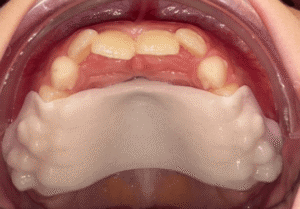
In plain terms, an expander is a small device that fits against the roof of the mouth and applies gentle, gradual pressure to widen the upper jaw. That extra width creates space, so teeth that would otherwise overlap have a better chance of coming in straight. According to the American Association of Orthodontists’ overview of palatal expanders, the process guides natural growth rather than forcing sudden change.
Why early timing matters
Early timing matters because a young jaw is more flexible and responds more easily to guided widening. Once growth slows, the same correction can become more involved. Acting during active growth lets the body do much of the work naturally.
What Is a Palatal Expander?
A palatal expander is a custom dental device that widens a narrow upper jaw by applying light, consistent pressure over several weeks or months. It is most often used in children whose upper jaw is too small to fit all their teeth comfortably or to allow the top and bottom teeth to meet correctly.
How it gently widens the upper jaw
The expander works because the two halves of the upper jaw are joined by a growth line that has not fully fused in younger children. Small, scheduled adjustments encourage this line to widen slightly, and new bone gradually fills the space. The result is a broader jaw and more room for teeth. This is why timing is such an important part of planning care.
Common types of expanders
There are a few common designs, and the right one depends on your child’s needs.
- Fixed expanders that attach to the back teeth and stay in place during treatment.
- Removable widening devices for milder cases in select children.
- Designs that combine widening with space to help guide incoming teeth.
At Titan Dental, Dr. Thuy B. Le selects the design based on a hands-on exam, X-rays, and how the jaw is developing.
How Palatal Expanders Correct Crowding
Palatal expanders correct crowding by increasing the width of the upper jaw so teeth have enough room to line up rather than overlap. When space is limited, teeth twist and crowd; adding width addresses the shortage of space directly at its source.
Creating room for teeth to come in
When the jaw is too narrow, permanent teeth may not have anywhere to go, so they erupt crooked or become blocked. By widening the jaw early, an expander opens up room for these teeth to arrive in a healthier position. Research on early intervention with palatal expansion for crowding supports the value of acting while the jaw is still growing.
Reducing the chance of future problems
Creating space early can lower the chance of more complicated concerns later, such as teeth that become stuck below the gum. Crowded teeth are also harder to clean, which can raise the risk of cavities and gum irritation. Making room early supports easier cleaning and a healthier mouth as your child grows.
How Expanders Help With Bite Issues
Expanders help with bite issues by correcting a narrow upper jaw so the top teeth sit over the bottom teeth the way they should. When the upper jaw is too small, the bite can shift to one side or the back teeth may bite incorrectly, and widening the jaw helps restore a more balanced fit.
Fixing a narrow upper jaw
A narrow upper jaw is one of the most common reasons a child may benefit from an expander. When the upper arch is too small compared to the lower arch, some upper teeth may sit inside the lower teeth instead of outside them. Widening the upper jaw helps the arches match and meet more evenly, which supports comfortable chewing and clearer speech in some cases.
Improving how the teeth meet
When the jaw is the right width, the upper and lower teeth come together more evenly across the mouth. This balanced contact can reduce uneven wear and lower strain on the jaw. A misaligned bite, sometimes described in dental references such as this overview of bite and jaw alignment concerns, can affect both function and comfort, so addressing it early is worthwhile.
Why Early Treatment Makes a Difference
Early treatment makes a difference because it works with your child’s natural growth instead of against it, often making the overall process simpler. Guiding development at the right time can reduce the need for more involved care later.
Working with a growing jaw
A growing jaw is far more cooperative than a fully mature one. During childhood, the bones respond readily to gentle guidance, so an expander can create meaningful change with light pressure. Waiting until growth is finished can limit these natural options and lead to longer, more complex care.
Possible long-term savings
Addressing concerns early can also help families avoid more costly steps down the road. Guidance from the American Association of Orthodontists on early care and cost notes that acting early may help families sidestep more involved treatments later. Simpler care today can mean fewer appointments and less expense over time, which many parents appreciate.
Signs to watch for early
- Crowded or overlapping baby and permanent teeth
- Upper teeth biting inside the lower teeth
- A jaw that looks or feels narrow
- Difficulty chewing on both sides evenly
Habits to skip
- Waiting until all permanent teeth arrive to seek an exam
- Ignoring mouth breathing or ongoing chewing complaints
- Assuming crowding will fix itself over time
- Skipping routine dental checkups
The Best Age for a Palatal Expander
The best age for a palatal expander is usually between about 7 and 10 years, when the upper jaw is still growing, and the two halves have not fully joined. At this stage, gentle widening is most effective and comfortable, though every child is different.
Ideal treatment window
Around age 7 is a helpful time for a first evaluation, because early permanent teeth are coming in and a dentist can spot a narrow jaw before it becomes harder to address. Treating within this window lets the expander work alongside your child’s natural growth for the smoothest outcome. This early visit is about watching and planning, not always starting care right away.
Is it ever too late?
It is not always too late once a child is older, but options can change as growth slows. In some older children and teens, widening is still possible, though it may take a different approach. This is why a personal evaluation matters so much; a hands-on exam is the only way to know what will work best for your child.
What to Expect During Treatment
During treatment, you can expect a short adjustment period, simple at-home care, and regular checkups to track progress. Most children adapt within a few days, and the daily routine quickly becomes second nature.
Placement
The expander is fitted to your child’s upper jaw during a comfortable appointment, and Dr. Le explains exactly how it works.
Adjustment period
Your child may notice the device for a few days and speak a little differently at first. This usually settles quickly as the mouth adapts.
Scheduled widening
Small adjustments are made on a set schedule so the jaw widens gradually and gently over the following weeks.
Progress checks
Regular visits let the team confirm the jaw is widening as planned and make any needed changes.
Getting used to the expander
Getting used to an expander takes most children only a few days. There may be mild pressure after adjustments and a brief change in speech, but these are normal and temporary. Soft foods and plenty of water help during the first day or two, and encouragement from parents goes a long way.
Caring for teeth and the expander
Good daily cleaning keeps both the teeth and the expander healthy. Brush gently around the device, rinse to clear away trapped food, and keep up with routine checkups. Families exploring other dental needs can also learn about our restorative dentistry options for whole-family care.
Ready to take the next step?
Schedule a consultation with Titan Dental in Orange.
Call +1 714-990-3321
Meet Dr. Thuy B. Le, a Blue Diamond Invisalign Provider
Dr. Thuy B. Le, DDS, serves as Clinical Director of Titan Dental in Orange, California. With over 20 years of experience in Invisalign, she specializes in clear aligner therapy as a discreet alternative to traditional metal braces for both adults and teens. She is skilled in a range of advanced dental services, including CAD-CAM dentistry for same-day crowns and veneers, the Chao Pinhole Surgical Technique for scalpel-free gum rejuvenation, and implant dentistry.
Dr. Le proudly serves patients of all ages, offering personalized care in general, cosmetic, children’s, and laser dentistry. She uses advanced technology, including the Fotona LightWalker laser and whitening systems such as ZOOM! and Rembrandt, to deliver strong results for her patients.
Dr. Le earned her Doctor of Dental Surgery degree from the University of Southern California and is a member of the American Dental Association, the California Dental Association, and the Orange County Dental Society. Her ongoing commitment to education has led her to pursue advanced certifications in several areas, including laser dentistry through the Institute for Laser Dentistry, Invisalign clear aligners, dental implants, needle-free and drill-free porcelain veneers, same-day onlays, inlays, crowns, and bridges using CAD-CAM technology, and in-office teeth whitening.
Cosmetic dentistry is a particular passion for Dr. Le, who enjoys creating smile transformations that boost patient confidence. She also has a special interest in working with fearful and anxious patients, understanding that many have had negative past dental experiences, and finds it rewarding to help them overcome those fears and achieve excellent oral health in a comfortable, compassionate environment.
Titan Dental, under Dr. Le’s leadership, proudly serves patients in Orange, Garden Grove, Santa Ana, and the surrounding Orange County communities, providing comprehensive dental care for kids, families, and adults through general, cosmetic, and restorative services.
Frequently asked questions
Q: What age is too late for an expander?
There is no single cutoff age, but expanders work best while the upper jaw is still growing, often before the two halves of the jaw fully join. This usually means the ideal window is childhood, though some older children and teens may still benefit from a different approach. The best way to know is a personal exam with Dr. Le, since every child grows at a different pace and options change as development slows.
Q: What problems can palate expanders fix?
Palate expanders can help with a narrow upper jaw, crowded teeth that lack room to line up, and certain bite concerns where the upper teeth sit incorrectly against the lower teeth. By widening the upper jaw, they create space and help the top and bottom teeth meet more evenly. Making room early can also reduce the risk of teeth becoming stuck and support easier at-home cleaning for a healthier mouth overall.
Q: Why are so many kids getting expanders?
More families are choosing early evaluations, so narrow jaws and crowding are being noticed sooner than in the past. Catching these concerns while a child is still growing allows for gentler, simpler care that works with natural development. Increased awareness of the value of early checkups, often starting around age 7, means more children receive guidance at the right time rather than waiting until problems become harder to address.
Q: Is 9 too late for a palate expander?
No, age 9 is generally still within a helpful window for many children, because the upper jaw is usually still growing at this stage. Gentle widening can often be effective and comfortable at this age. That said, growth varies from child to child, so a hands-on exam and X-rays are the only reliable way to confirm whether an expander is a good fit for your child right now.
Want to schedule an appointment now? Follow our directions, use this helpful Google Maps link, or get step-by-step navigation via Get Directions.
We serve Santa Ana, Tustin, Tustin Foothills, Anaheim, Garden Grove, Placentia, Fullerton, Irvine, Yorba Linda, Fountain Valley, Westminster, Stanton, Costa Mesa, Brea, and Buena Park, California.
We also proudly serve the City of Orange, the City of Irvine, the City of Villa Park, the City of Anaheim Hills, and our neighboring communities.
Remember: Early evaluation gives your child the gentlest path to a healthy smile, so schedule a checkup around age 7.
Disclaimer: This article is for general information only and is not a substitute for a personal exam and advice from Dr. Thuy B. Le, DDS at Titan Dental.