Quick answer
Many children are ready for Invisalign First between ages 6 and 10, while they still have a mix of baby and adult teeth. Phase 1 care gently guides jaw growth and creates space for incoming teeth, and a simple consultation is the best way to know if the timing is right.
Ages 6-10
Common window for early guidance
Mixed teeth
Ideal stage for Phase 1
6-12 months
Typical Phase 1 timeline
Age 7
Suggested first checkup
Key takeaways
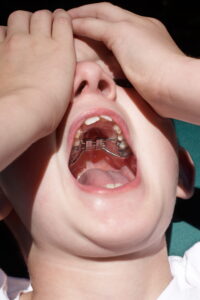
- A palatal expander gradually widens the upper jaw to make space for crowded teeth.
- Early care works with a child’s natural growth, which can simplify future treatment.
- The most effective window is usually between ages 7 and 10, when the jaw bones are still developing.
- Expanders can help correct a narrow upper jaw and improve how the top and bottom teeth meet.
- Regular checkups with Dr. Thuy B. Le at Titan Dental in Orange, CA help track progress safely.
Quick Answer: Is Your Child Ready for Invisalign?
Your child may be ready for Invisalign when they still have a mix of baby and adult teeth, usually between ages 6 and 10, and when their smile shows early signs of crowding or spacing that could benefit from gentle guidance. At Titan Dental, a short consultation can help determine whether early Invisalign care is appropriate by looking at how the teeth and jaws are developing and deciding whether treatment makes sense now or later.
Every child grows at their own pace, so readiness is about development rather than a single birthday. Some children benefit from starting early, while others do better waiting until more adult teeth arrive.
Signs your child may benefit from early treatment
Watch for a few everyday clues that early care could help. These include noticeable crowding, teeth that seem to stick out or overlap, difficulty biting or chewing, thumb sucking beyond the toddler years, or upper and lower teeth that do not line up when your child bites down. The American Association of Orthodontists notes that early evaluation helps catch these patterns before they become harder to manage, as explained in their guidance on early treatment for children.
When to schedule a first consultation
A good rule of thumb is to schedule your child’s first checkup around age 7. By this stage, enough adult teeth have usually arrived to reveal how the bite is forming. Even if no treatment is needed yet, this visit gives us a baseline and lets us watch growth over time.
What Is Phase 1 Treatment?
Phase 1 treatment is early care that begins while your child still has a mix of baby and adult teeth. The goal is not to perfect the smile in one step but to guide jaw growth, create room for incoming teeth, and address bite concerns before they grow more complex.
The goal of early guidance
Early guidance works with your child’s natural growth rather than against it. When we make small corrections during active development, we can encourage the jaws and teeth to settle into healthier positions. This can reduce crowding, improve how the teeth meet, and set the stage for an easier second phase later if one is needed.
How Phase 1 differs from later treatment
Phase 1 focuses on foundation and timing, while a later phase focuses on fine-tuning once most adult teeth are present. Think of Phase 1 as preparing the space and Phase 2 as arranging the final details. Not every child needs both phases, and some children only need monitoring during these years.
Understanding Invisalign First for Kids
Invisalign First is a version of clear aligner care designed specifically for younger patients who still have baby and adult teeth together. Instead of fixed hardware, your child wears a series of smooth, clear trays that gently move teeth and support healthy growth.
How clear aligners work for younger patients
Each set of aligners is custom-made for your child and worn in order, with each tray making small, planned movements. Research reviewing clear aligners in younger patients notes that these trays can address a range of developing concerns when used consistently, as summarized in a review of aligner therapy for children with mixed teeth. Aligners can also make room for teeth that are still coming in, which is helpful during these active years.
Comfort and everyday wear
Most children adjust to aligners quickly because the trays are smooth and removable for cleaning. For the best results, your child should wear the aligners all the time, except during oral hygiene like brushing and flossing. Clear trays are easy to keep clean and let kids continue their normal school and activity routines with confidence.
The Best Age to Start Invisalign for Children
The best age to start Invisalign for many children is roughly between 6 and 10, during the mixed-tooth stage. This window matters because the jaws are still growing and more responsive to gentle guidance.
Why the mixed-tooth stage matters
During the mixed-tooth stage, baby teeth are making way for adult teeth, and there is a natural opportunity to influence spacing and alignment. Guiding development now can prevent some concerns from settling in as the child grows. Reviews of care for growing children highlight how timing during active growth supports better outcomes, as discussed in this overview of current trends in care for children.
Growth and timing considerations
Because children develop differently, the right start date depends on your child, not a fixed number. We look at how many adult teeth have arrived, how the jaws are growing, and whether any bite concerns are present. Sometimes the best decision is to wait and watch, and that patience can be just as valuable as starting early.
Is Phase 1 Treatment Worth It?
Phase 1 treatment is often worth it when a child has a clear developing concern that responds well to early guidance. For the right child, starting early can reduce the complexity of later care and support healthier growth. For others, it may not be necessary, which is why an honest evaluation matters.
Benefits of guiding growth early
The main benefits include creating space for incoming teeth, improving how the bite comes together, and addressing habits that affect development. Early care can also boost a child’s comfort and confidence during a time when their smile is changing quickly.
What should parents keep in mind?
Keep in mind that Phase 1 is about foundation, not a finished result. Some children will need a second phase later, and consistent aligner wear is essential for success. It also helps to pair early care with strong daily habits and routine dental visits, which support overall restorative dentistry health as your child grows.
Use these
- Wear aligners all day, except during oral hygiene
- Brush and floss before placing aligners back
- Keep every scheduled checkup
- Store aligners in their case when not worn
- Follow the tray order exactly as directed
Avoid these
- Skipping wear time during the day
- Leaving aligners loose in a pocket or napkin
- Missing progress visits
- Cleaning trays with hot water that can warp them
- Switching to a new tray too early
How Long Does Phase 1 Treatment Take?
Phase 1 treatment usually takes about 6 to 12 months, though the exact length depends on your child’s needs and how consistently the aligners are worn. Some cases are shorter, and some require a little more time.
Typical timelines for young patients
Most young patients complete their early guidance within roughly a year, followed by a resting period while more adult teeth arrive. During this pause, we monitor growth and decide whether a second phase is helpful. A scoping review of aligner care in younger patients supports the idea that steady, planned wear leads to reliable progress, as noted in this review of aligners in dentistry for children.
Wearing aligners consistently for the best results
Consistency is the single biggest factor in how well and how quickly Phase 1 works. Aligners guide teeth only while they are being worn, so your child should keep them in all the time, except during oral hygiene. A simple family routine makes this easy to maintain.
Wear all day
Keep aligners in throughout the day and night, pausing only for brushing and flossing.
Clean daily
Rinse and gently clean the trays each day to keep them clear and fresh.
Track your trays
Move to the next tray only when directed to keep progress on schedule.
Attend checkups
Visit us on schedule so we can confirm growth is heading in the right direction.
What to Expect During Your Visit in Orange, CA
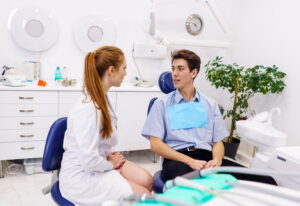
During your visit in Orange, CA, you can expect a relaxed, friendly evaluation focused on your child’s comfort. We take time to understand your questions and explain everything in plain language so you feel confident about the next step.
The consultation and evaluation process
We begin by looking at how your child’s teeth and jaws are developing, reviewing their bite, and discussing any habits or concerns you have noticed at home. This first look helps us decide whether early care is helpful now, or whether monitoring is the better choice for the moment.
Building a care plan for your child
If early care is a good fit, we build a clear, personalized plan that fits your child’s growth and your family’s routine. We walk you through the timeline, the wear schedule, and what results to expect. Our goal is a plan that feels approachable and easy to follow. To ask about Invisalign options for your child, call our Orange, CA office at (714) 990-3321.
Meet Dr. Thuy B. Le, a Blue Diamond Invisalign Provider
Dr. Thuy B. Le, DDS, serves as Clinical Director of Titan Dental in Orange, California. With over 20 years of experience in Invisalign, she specializes in clear aligner therapy as a discreet alternative to traditional metal braces for both adults and teens. She is skilled in a range of advanced dental services, including CAD-CAM dentistry for same-day crowns and veneers, the Chao Pinhole Surgical Technique for scalpel-free gum rejuvenation, and implant dentistry.
Dr. Le proudly serves patients of all ages, offering personalized care in general dentistry, cosmetic dentistry, children’s dentistry, and laser dentistry. She uses advanced technology, including the Fotona LightWalker laser and whitening systems such as ZOOM! and Rembrandt, to deliver strong results for her patients.
Dr. Le earned her Doctor of Dental Surgery degree from the University of Southern California and is a member of the American Dental Association, the California Dental Association, and the Orange County Dental Society. Her ongoing commitment to education has led her to pursue advanced certifications in several areas, including laser dentistry through the Institute for Laser Dentistry, Invisalign clear aligners, dental implants, needle-free and drill-free porcelain veneers, same-day onlays, inlays, crowns, and bridges using CAD-CAM technology, and in-office teeth whitening.
Cosmetic dentistry is a particular passion for Dr. Le, who enjoys creating smile transformations that boost patient confidence. She also has a special interest in working with fearful and anxious patients, understanding that many have had negative past dental experiences, and finds it rewarding to help them overcome those fears and achieve excellent oral health in a comfortable, compassionate environment.
Titan Dental, under Dr. Le’s leadership, proudly serves patients in Orange, Garden Grove, Santa Ana, and the surrounding Orange County communities, providing comprehensive dental care for kids, families, and adults through general, cosmetic, and restorative services.
Frequently asked questions
Q: Is phase 1 orthodontics worth it?
Phase 1 care is often worth it when a child has a developing concern that responds well to early guidance, such as crowding, spacing, or bite issues. For the right child, it can create space for incoming teeth and make future care simpler. Not every child needs it, so a consultation is the best way to decide.
Q: What is the best age to start Invisalign for children?
For many children, the best age to start Invisalign is roughly between 6 and 10, during the mixed-tooth stage when both baby and adult teeth are present. The jaws are still growing at this time, which allows gentle guidance. The right timing depends on your child’s development, so an evaluation is recommended.
Q: How long do phase 1 orthodontics take?
Phase 1 care usually takes about 6 to 12 months, depending on your child’s needs and how consistently the aligners are worn. This is often followed by a resting period while more adult teeth arrive. Steady daily wear is the biggest factor in staying on schedule.
Q: What does phase 1 of treatment look like?
Phase 1 involves early guidance while your child still has a mix of baby and adult teeth. With Invisalign First, your child wears custom clear trays all the time, except during oral hygiene, to guide growth and create room for incoming teeth. It focuses on the foundation, with any fine-tuning saved for a later phase if needed.
Want to schedule an appointment now? Follow our directions, use this helpful Google Maps link, or get step-by-step navigation via Get Directions.
We serve Santa Ana, Tustin, Tustin Foothills, Anaheim, Garden Grove, Placentia, Fullerton, Irvine, Yorba Linda, Fountain Valley, Westminster, Stanton, Costa Mesa, Brea, and Buena Park, California.
We also proudly serve the City of Orange, the City of Irvine, the City of Villa Park, the City of Anaheim Hills, and our neighboring communities.
Remember: Every child grows differently, so the best time to start Invisalign depends on your child’s own development, not a single age.
Disclaimer: This article is for general information only and is not a substitute for a personal evaluation with a licensed dental provider.