At Titan Dental, Dr. Thuy B. Le, a Blue Diamond Invisalign® Provider, is committed to delivering exceptional dental care with a focus on personalized, compassionate treatment. She strives to create a comfortable, welcoming environment for every patient, ensuring each visit is tailored to individual needs and promotes optimal oral health. Dr. Le’s dedication to using the latest dental technologies and adhering to the highest standards of safety and hygiene reflects her unwavering commitment to her patients’ well-being and satisfaction. Trust Dr. Le and the Titan Dental team to help you achieve and maintain a beautiful, healthy smile.
Introduction
Every parent knows the feeling of watching a child grow almost overnight. Shoes suddenly feel tight. School uniforms need replacing. Baby teeth fall out, adult teeth arrive, and before you know it, your child’s smile begins telling a new story. Sometimes, that story needs a little guidance. A narrow upper jaw can make it harder for adult teeth to come in comfortably. It may lead to crowding, crossbite, uneven bite pressure, mouth-breathing concerns, or future treatment needs that could become more complex if left unaddressed. This is why palatal expanders are often discussed during a child’s growth years.
For many families, the question is no longer simply, “Does my child need an expander?” The bigger question is, “Which type of expander makes the most sense for my child?” At Titan Dental, Dr. Thuy B. Le helps parents understand the difference between traditional palatal expanders and Invisalign Palatal Expanders (IPE). This guide offers Dr. Thuy B. Le’s comparison of traditional and IPE expanders in a clear, parent-friendly way so you can feel more confident during your child’s care journey.
The Expander Conversation Parents Are Having Today
For years, traditional metal palatal expanders were the familiar option. Many parents remember hearing about a small metal device placed in the roof of the mouth, often attached to back teeth, with a tiny screw in the center. A parent may be asked to turn the screw with a key according to the doctor’s instructions. That approach has helped many children over time. It can widen the upper jaw during the years when growth is still active, creating more room for teeth to settle into better positions.
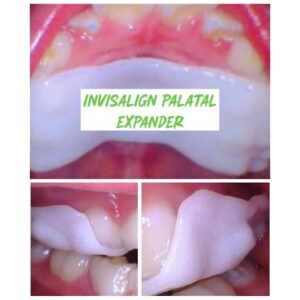
But dentistry has changed. Digital planning, scanning, and 3D printing have opened the door to a newer option: the Invisalign Palatal Expander. IPE takes the concept of jaw expansion and gives it a more modern design. Instead of a metal device with a screw, IPE uses a series of custom-made, 3D-printed expanders designed to guide expansion in carefully planned steps. Each expander is created from a digital scan, which helps the device fit the child’s mouth with precision.
This is where Dr. Thuy B. Le’s insight on expander differences becomes helpful. The goal of both options may be similar, but the daily experience can feel very different for the child and the parent.
Traditional Palatal Expanders: The Familiar Path
A traditional palatal expander is usually fixed in place. It sits against the roof of the mouth and is commonly attached to upper teeth. The device has a center screw that is turned gradually to apply gentle pressure to the upper jaw. For parents, this can feel like a very hands-on process. You may be given a small key and specific instructions on when and how to activate the device. Some families manage this routine easily. Others feel nervous about turning the key correctly, especially during the first few days.
Traditional expanders may be recommended when a child needs upper-jaw widening, bite correction, or space for incoming adult teeth. Since the device stays in place, parents do not have to worry about the child misplacing it. That can be a benefit for younger children who may not be ready for more responsibility.
However, fixed metal expanders can also bring challenges. Food may collect around the device. Brushing can require more patience. Speech may feel different at first. Some children notice pressure, extra saliva, or mild soreness as they adjust. These experiences are common, but they can still feel overwhelming for a child who is sensitive to change. The traditional expander is like an older bridge that still gets people across the river. It works, but the ride may feel a little less smooth.
IPE: A Digital-Age Approach to Palatal Expansion
The Invisalign Palatal Expander is designed with today’s digital care in mind. Instead of using a metal screw system, IPE uses a sequence of 3D-printed expanders. Each one is created to support a specific stage of expansion. Parents often appreciate that IPE begins with a digital scan rather than messy impressions. The scan helps create a custom plan, and the expanders are made to fit the child’s mouth closely. This can make the experience feel more modern, more planned, and easier to understand.
IPE is also designed without metal wires and screws. For many children, that can make the device feel less intimidating. The smooth design may feel more natural in the mouth, especially after the first adjustment period. A key difference is that IPE does not depend on parent key-turning in the same way a traditional expander does. Instead, the child moves through a planned series of expanders as directed by Dr. Le. This can reduce some of the stress parents feel when asked to activate a traditional screw device at home.
When families ask about choosing expanders with Dr. Thuy B. Le’s guidance, one of the biggest discussion points is the child’s personality. Some children do well with a fixed device because it stays in place. Others may feel more comfortable with a smooth, digitally made option that fits into a staged plan.
The Parents’ View: Comfort, Routine, and Responsibility
Parents rarely make care decisions based on technology alone. They think about mornings before school, bedtime brushing, lunch breaks, sports, speech, comfort, and whether their child will cooperate. A traditional expander may feel more secure because it is fixed. Once placed, it stays in the mouth. There is no daily decision about whether the child will wear it properly. That can be reassuring for parents of younger children. The tradeoff is that cleaning around a fixed expander takes time. Food can get trapped. Parents may need to supervise brushing more closely. Children may also need a few days to speak clearly and eat comfortably.
IPE creates a different kind of routine. It is made for planned wear, and parents must follow Dr. Le’s instructions carefully. Any out-of-mouth time should be limited to oral hygiene as directed. Consistency matters because the expanders are part of a staged plan. If the child does not wear them as instructed, progress may be affected.
In families where the child is responsible, motivated, and comfortable following directions, IPE can run more smoothly. In families where the child tends to misplace items or resist routines, Dr. Le may discuss whether a fixed, traditional option is more practical. This is why Parent advice on expanders from Dr. Thuy B. Le is not one-size-fits-all. The best choice depends on the child’s growth, bite, habits, maturity, and family routine.
The Child’s View: What Will It Feel Like?
Children do not usually ask about clinical design. They ask simpler questions.
- Will it hurt?
- Will I talk funny?
- Will my friends notice?
- Will I still feel like myself?
With either type of expander, some pressure is normal. That pressure is part of how expansion works. The upper jaw is being gently guided while the child is still growing. The feeling is usually strongest when a new stage begins or when the device is first placed. Traditional expanders may feel bulkier because of the metal framework. Some children adjust quickly, while others need more encouragement. Speech may sound different for a short period, especially with certain words. Reading aloud at home can help children adjust faster. IPE may feel less intimidating because of its smooth, custom-made design.
Since it is digitally planned and 3D-printed, it can feel more refined than a metal device. Children who are nervous about metal appliances may feel more open to this option. That said, no expander is magic. Success still depends on following instructions, keeping the mouth clean, attending progress visits, and telling the dental team if something feels off.
How Dr. Thuy B. Le Helps Parents Compare the Two
At Titan Dental, the conversation begins with your child, not the device. Dr. Le may evaluate jaw width, bite relationship, spacing, crowding, eruption patterns, oral habits, and growth stage. She may also look at whether your child has signs of crossbite, narrow arches, or limited space for adult teeth. From there, Dr. Le explains whether expansion is needed and which approach may best fit your child. This is where the comparison becomes practical. A traditional expander may be a strong fit when a fixed option is preferred, when the child is not ready to manage a staged removable system, or when the care plan calls for that specific appliance style.
IPE may be a strong fit when digital planning, a smooth 3D-printed design, and a no-screw activation experience are appealing for the child and parent. It may also be helpful for families seeking a modern option that is easier to clean during oral hygiene routines. Both options require commitment. Both require monitoring. Both should be chosen based on your child’s needs, not based on trends or convenience alone.
Benefits Parents Should Weigh Carefully
Traditional expanders may offer the benefit of being fixed in place, familiar, widely used, and effective for many children. Parents do not have to manage a series of separate devices, and the child cannot forget to put them back in after brushing. IPE may offer the benefits of digital planning, a custom 3D-printed fit, smoother design, no metal screw turning, and easier access for oral hygiene when used as directed. It may also feel less intimidating for children who are anxious about metal appliances.
The most important benefit is not the device itself. It is timing. When expansion is recommended during the appropriate growth window, it may help create room for adult teeth, improve bite balance, and reduce the risk of more complex care later. Waiting too long can sometimes limit the options available. That is why early evaluation matters. Parents do not need to diagnose the problem. They simply need to ask the right questions at the right time.
Key Takeaways
- A palatal expander may be recommended when a child’s upper jaw is narrow, when teeth are crowded, or when the bite is not fitting together properly.
- Traditional expanders are usually fixed metal devices that use a screw system and may require parent activation at home.
- IPE stands for Invisalign Palatal Expander and uses a digitally planned series of custom 3D-printed expanders instead of a metal screw.
- Both traditional and IPE expanders can support healthy jaw development when recommended at the right time.
- The right choice depends on your child’s growth, bite, comfort level, responsibility, hygiene routine, and Dr. Thuy B. Le’s clinical guidance at Titan Dental.
Frequently Asked Questions
1. Is an IPE better than a traditional palatal expander?
Not always. IPE may offer a more modern, smooth, digitally designed experience, while traditional expanders may be better for children who need a fixed device. The right option depends on your child’s growth, bite, habits, and ability to follow instructions.
2. Does a palatal expander hurt?
Most children feel pressure rather than sharp pain. Mild soreness, speech changes, and extra saliva can happen during the adjustment period. These usually improve as the child gets used to the device.
3. Why would my child need a palatal expander?
A child may need an expander if the upper jaw is too narrow, the adult teeth need more room, or the bite does not fit properly. Expansion works best when a child is still growing, which is why early evaluation can be helpful.
4. How do parents choose between traditional and IPE expanders?
Parents should consider comfort, hygiene, responsibility, daily routine, and the child’s specific dental growth needs. Dr. Thuy B. Le can explain the benefits and limits of each option during a consultation at Titan Dental.
5. Can my child keep up with school and daily life during expander treatment?
Yes. Most children continue school, activities, and daily routines during expander treatment. There may be a short adjustment period for speech and comfort, but children often adapt with practice and support.
Conclusion
Traditional expanders and IPE expanders both serve an important purpose: guiding the growth of the upper jaw at the right time. The difference lies in the design, daily routine, comfort experience, and level of responsibility involved. For some children, the traditional fixed expander remains a dependable choice. For others, IPE offers a more modern path with digital planning, a smooth 3D-printed design, and no parent screw-turning routine.
At Titan Dental, Dr. Thuy B. Le helps families look beyond the device and focus on the child. Your child’s smile is still developing, and the right guidance today can make tomorrow’s care simpler, healthier, and more comfortable.
Want to schedule an appointment now? Follow our directions, use this helpful Google Maps link, or get step-by-step navigation via Get Directions.
We serve Santa Ana, Tustin, Tustin Foothills, Anaheim, Garden Grove, Placentia, Fullerton, Irvine, Yorba Linda, Fountain Valley, Westminster, Stanton, Costa Mesa, Brea, and Buena Park, California.
We also proudly serve the City of Orange, the City of Irvine, the City of Villa Park, the City of Anaheim Hills, and our neighboring communities.
Remember: The best expander decision is not about choosing the newest option or the most familiar one. It is about choosing the option that supports your child’s growth, comfort, hygiene, and daily routine with proper guidance from Dr. Thuy B. Le at Titan Dental.
Disclaimer: This blog is for general educational purposes only and does not replace a dental evaluation. Please schedule a consultation with Titan Dental for recommendations based on your child’s specific needs.