Key takeaways
- The seven most common signs are crowding, crossbite, mouth breathing/snoring, a narrow high-arched palate, impacted teeth, chewing difficulty, and speech problems.
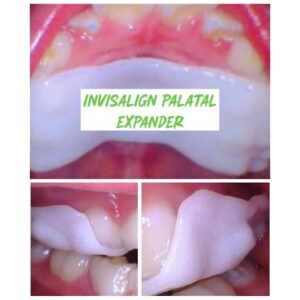
- The Invisalign Palatal Expander is a removable, clear alternative to fixed metal rapid palatal expanders and is FDA-cleared for skeletal expansion in growing children.
- Early evaluation during mixed dentition (roughly ages 7 to 10) takes advantage of active jaw growth for more predictable results.
- Clinical studies show that clear aligner expansion can meaningfully increase palatal volume and arch width in patients with mixed dentition.
- Families in Orange, CA can schedule an evaluation with Dr. Thuy B. Le to determine if expansion is appropriate.
Quick Answer: Signs Your Child May Need a Palatal Expander
If your child has crowded teeth, a crossbite, chronic mouth breathing or snoring, a narrow high-arched palate, teeth that are stuck and cannot erupt, difficulty chewing, or unclear speech, these are the most common signs that a palatal expander may help. The only way to confirm the need is a dental evaluation while the jaw is still growing.
Top warning signs at a glance
- Overlapping or severely crowded upper teeth
- Upper teeth biting inside the lower teeth (crossbite)
- Persistent mouth breathing, snoring, or trouble breathing through the nose
- A narrow, deep, or V-shaped palate
- Teeth that seem blocked out or impacted
- Complaints of difficulty biting or chewing
- Speech that sounds muffled or unclear
When to schedule an evaluation
The American Association of Orthodontists recommends a first dental check around age 7, and this timing is not arbitrary. At this age, enough permanent teeth and jaw structures are visible to spot developing problems while the upper jaw bones are still separated by a growth suture that responds well to gentle widening. If you notice even one of the signs above, an evaluation now can prevent the need for more complex treatment later.
What Is a Palatal Expander (and How Do Invisalign Palatal Expanders Fit In)?
A palatal expander is a dental appliance that gradually widens the upper jaw (maxilla) to correct a narrow arch and create room for teeth. In growing children, the two halves of the upper jaw are joined by a suture that has not yet fused, so light, steady pressure separates them and new bone fills the space. Invisalign palatal expanders deliver that same expansion using a series of clear, removable devices instead of fixed metal hardware.
Traditional rapid palatal expanders vs. Invisalign palatal expanders
Traditional rapid palatal expanders (RPEs) are cemented to the back teeth, and a parent turns a small key each day to widen the appliance. They are effective and time-tested. The Invisalign Palatal Expander System is a newer, removable clear appliance that is FDA-cleared for maxillary skeletal and dental expansion in growing patients. The key practical difference is comfort and hygiene: there is no metal framework, no daily key turning, and the device comes out for brushing and flossing.
How the Invisalign Palatal Expander System works for kids
Each child receives a series of custom expander devices, each slightly wider than the last. The child wears the device nearly full-time and steps up to the next one on a schedule set by the provider, so expansion occurs in small, controlled increments rather than daily manual cranking. Because it is removable, brushing and flossing stay normal, which matters a great deal for children still learning good hygiene habits.
7 Signs Your Child May Need a Palatal Expander
Below are the seven signs we most often look for during a pediatric evaluation. One sign alone does not always mean expansion is needed, but any of them warrants a professional look.
1. Crowded or overlapping teeth
Crowding is often the first sign parents notice. When the upper jaw is too narrow, there simply is not enough room for the permanent teeth, so they overlap or twist. Widening the arch can create space and reduce or even eliminate the need for extractions later.
2. Crossbite (upper teeth biting inside lower teeth)
A crossbite occurs when some upper teeth close inside the lower teeth rather than outside them. This is one of the clearest indications for expansion because it usually reflects a jaw that is too narrow. Left untreated, a crossbite can cause uneven jaw growth and wear on the teeth.
3. Mouth breathing, snoring, or difficulty breathing through the nose
Chronic mouth breathing and snoring can accompany a narrow palate, because the roof of the mouth is also the floor of the nasal cavity. Widening the palate can increase nasal airway space in some children. This does not replace a physician evaluation for airway or sleep concerns, so we coordinate care when breathing symptoms are present.
4. Narrow, high-arched palate
A deep, V-shaped, or high-arched roof of the mouth is a structural sign of a constricted upper jaw. You may notice it looks vaulted or narrow compared to other children. This is exactly the anatomy an expander is designed to correct.
5. Impacted or blocked-out teeth
When teeth cannot erupt because there is no room, they become impacted or blocked out. Creating arch width early can guide these teeth into their proper positions and avoid surgical exposure later.
6. Difficulty chewing or biting
If your child avoids certain foods or complains that biting feels off, a poor fit between the upper and lower arches may be to blame. Correcting arch width often improves how the teeth meet and function.
7. Speech difficulties
A narrow or high palate can affect tongue placement and, in some children, contribute to unclear speech. Expansion is not a cure for all speech issues, but improving the shape of the palate can support clearer articulation alongside any speech therapy.
Why Early Evaluation Matters in Mixed Dentition
Early evaluation matters because expansion is most predictable while the upper jaw suture is still open, which is during mixed dentition when a child has both baby and permanent teeth. Acting in this window lets us guide growth rather than fight it later.
The ideal age window for expansion
The most favorable window is generally between ages 7 and 10, when the midpalatal suture responds readily to gentle separation. As children approach and pass puberty, the suture begins to fuse, which makes non-surgical expansion harder and less reliable. This is why a first evaluation at age 7 is so valuable, even if treatment is not started right away.
Are Invisalign Palatal Expanders Effective?
Yes, current research supports Invisalign and clear aligner expansion as effective for widening the palate in growing children, though results depend on case selection and consistent wear. They are best suited to mild-to-moderate constriction diagnosed early.
How Invisalign expanders compare to rapid palatal expanders
Where Invisalign expanders shine
- Removable for easy brushing and flossing
- No metal bands or daily key turning
- Clear and low-profile for self-conscious kids
- Controlled, staged expansion increments
Where a metal RPE may be preferred
- Severe skeletal constriction requiring maximum force
- Children who cannot reliably wear a removable device
- Cases where full-time fixed pressure is clinically needed
What to Expect During Treatment
Treatment starts with a diagnosis, moves into daily wear of the clear expander, and includes regular monitoring visits. Here is how the process typically unfolds in our office.
Consultation and diagnostic records
We review your child’s history, examine the bite and palate, and take digital scans and images. This lets us confirm whether expansion is appropriate and design a custom device series.
Daily wear and comfort
Your child wears the expander nearly full time, removing it only to brush. Mild pressure or tightness is normal for a day or two after advancing to a new device and usually eases quickly.
Follow-up visits and monitoring
We see your child periodically to verify the expansion is tracking as planned and to hand off the next devices. These check-ins let us make adjustments early and keep treatment on schedule.
Next Steps for Families in Orange, CA
If you recognize any of the signs above in your child, the next step is a professional evaluation. Our Orange, CA practice provides personalized pediatric dental assessments and clear aligner therapy under the care of Dr. Thuy B. Le.
How our practice evaluates your child
We combine a hands-on exam with digital imaging to assess arch width, bite relationship, and airway signs, then explain whether an Invisalign expander, a traditional expander, or watchful waiting is the best path. If other dental needs arise during the exam, we can coordinate with our restorative dentistry services to keep your child’s overall oral health on track.
Booking a consultation
You can schedule an evaluation online or call us at 714-990-3321. Invisalign treatment pricing is provided after your consultation to reflect your child’s specific case. Early evaluation costs you nothing but time and can save your family from more complex treatment later.
Have questions about your care? Book a consult with our team in Orange.
At Titan Dental, Dr. Thuy B. Le, a Blue Diamond Invisalign Provider, is committed to delivering exceptional dental care with a focus on personalized, compassionate treatment. She strives to create a comfortable, welcoming environment for every patient, ensuring each visit is tailored to individual needs and promotes optimal oral health. Dr. Le’s dedication to using the latest dental technologies and adhering to the highest standards of safety and hygiene reflects her unwavering commitment to her patients’ well-being and satisfaction. Trust Dr. Le and the Titan Dental team to help you achieve and maintain a beautiful, healthy smile.
Frequently asked questions
Q: How long do Invisalign palatal expanders last?
The active expansion phase typically lasts several months, with each device worn for a set period before advancing to the next in the series. Your provider follows the expansion with a retention period to ensure the widened jaw stabilizes. Exact timelines depend on how much expansion is needed and how consistently your child wears the device.
Q: Are Invisalign expanders effective?
Yes. A systematic review and a randomized controlled trial both found that clear aligner expansion increases arch width and palatal volume in growing children. They work best for mild-to-moderate narrowing diagnosed early, with reliable full-time wear. Severe skeletal cases may still be better treated with a fixed metal expander.
Q: At what age should my child get a palatal expander?
The most favorable window is roughly ages 7 to 10, during mixed dentition when the upper jaw suture is still open and responds well to gentle widening. A first dental evaluation at age 7 is recommended so any need can be identified early, even if treatment starts later.
Q: Does a palatal expander hurt?
Most children feel pressure or mild tightness rather than pain, usually for a day or two after starting a new device. Because Invisalign expanders apply controlled, staged force and are removable for brushing, many kids find them comfortable. Any lasting discomfort should be reported to your provider.
Q: How is an Invisalign palatal expander different from a metal expander?
A metal rapid palatal expander is cemented to the teeth and turned with a key each day, while the Invisalign Palatal Expander is a clear, removable device worn in a staged series. The Invisalign version allows normal eating, brushing, and flossing and has no metal framework, though a fixed metal expander may still be preferred for severe cases.
Want to schedule an appointment now? Follow our directions, use this helpful Google Maps link, or get step-by-step navigation via Get Directions.
We serve Santa Ana, Tustin, Tustin Foothills, Anaheim, Garden Grove, Placentia, Fullerton, Irvine, Yorba Linda, Fountain Valley, Westminster, Stanton, Costa Mesa, Brea, and Buena Park, California.
We also proudly serve the City of Orange, the City of Irvine, the City of Villa Park, the City of Anaheim Hills, and our neighboring communities.
Ready to take the next step?
Schedule a consultation with Titan Dental in Orange.
Book online | Call +1 714-990-3321
Remember: Early evaluation can help identify jaw development and bite concerns while your child is still growing. Not every child with crowding or breathing concerns needs a palatal expander, so a professional assessment is essential.
Disclaimer: This blog is for general educational purposes and should not replace personalized dental or medical advice. Treatment suitability, appliance selection, and results vary based on your child’s age, growth, oral health, and individual needs.